Hook
| Before | After |
|---|---|
| Arm the polygon tool in the VS Code map. Hide and re-show the panel, or run “Developer: Reload Webviews”. The toolbar silently snaps back to “no tool selected” and you have to re-click. | Arm the polygon tool. Trigger the same rebuild. The toolbar comes back armed on the same tool, with the same palette colour, and you can keep drawing without breaking stride. |
What We Built
When you armed a drawing tool in the VS Code map panel, the armed state lived in a React useState hook inside the webview. The moment that webview rebuilt — hide/show the panel, “Developer: Reload Webviews”, or any layout change that forced a remount — the local state was thrown away and the tool silently disarmed. You were left looking at a toolbar that had helpfully reset itself to “no tool” without telling you.
This change moves the drawing mode and palette index out of component-local state and onto the existing session-state spatial slice, so they survive a webview rebuild. The architectural rule is simple: anything that is part of the user’s session — the armed tool, the colour they picked, the time slider, the display mode — belongs in the store, not in a transient React hook. Drawing mode was the last hold-out, and it is the one users actually notice when it breaks.
How It Fits
This closes findings F-3.1 and F-3.2 from the architectural-consistency review (Epic E06). Most of the wiring already existed from an earlier PR: the web-shell reads drawing values from the store, the VS Code host subscribes to the spatial slice and forwards changes across the message bridge, and the webview round-trips toolbar clicks back as drawingModeChanged. The one remaining gap was the bootstrap path — when a new webview came up and sent webviewReady, the host seeded it with current time and display mode but not with current drawing mode or palette index. So the store kept the right value across a rebuild; the webview just never asked for it on the way back in. Two postMessage calls in the existing webviewReady handler close the loop.
Screenshots
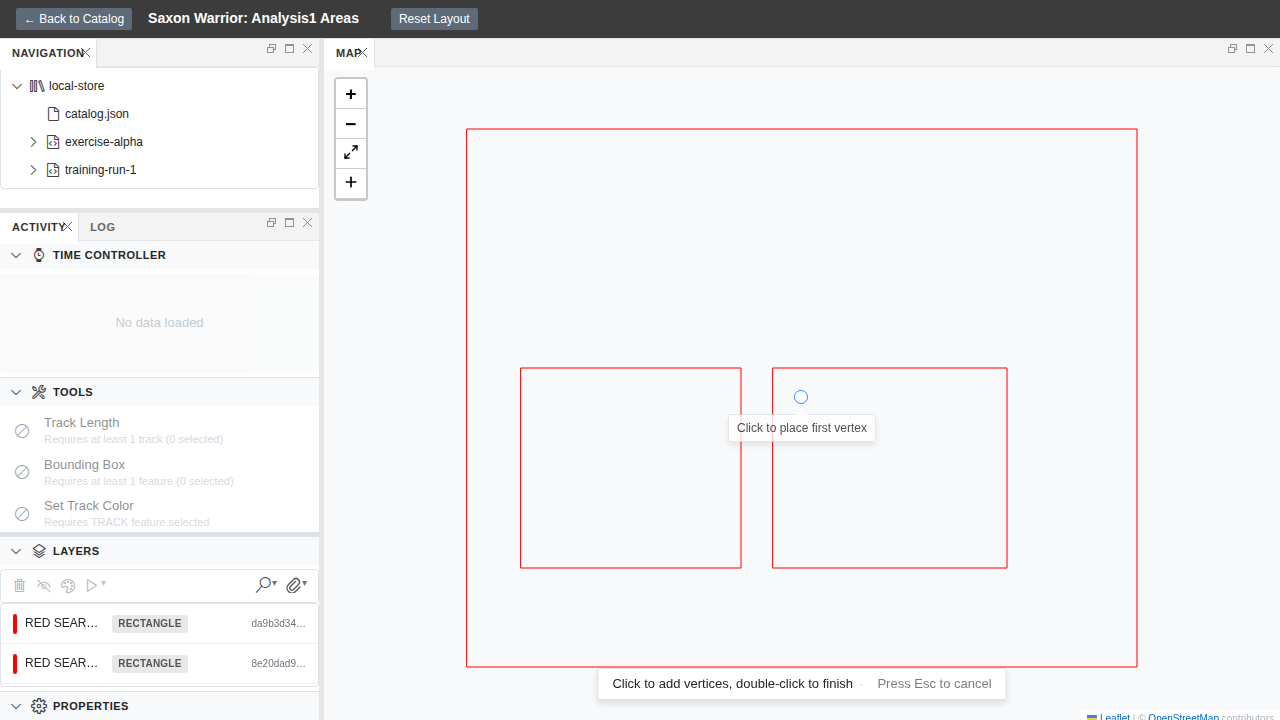
Before reload — polygon tool armed, palette set to entry 1.
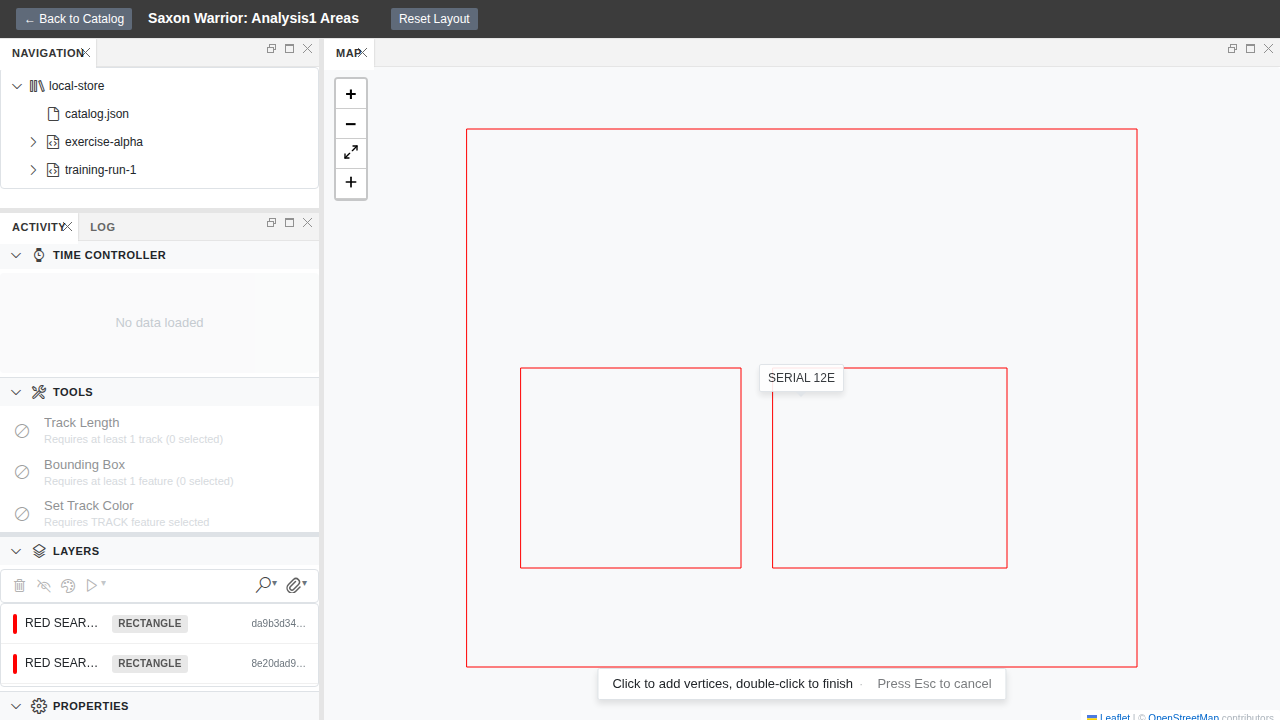
After reload — same session, same toolbar state.
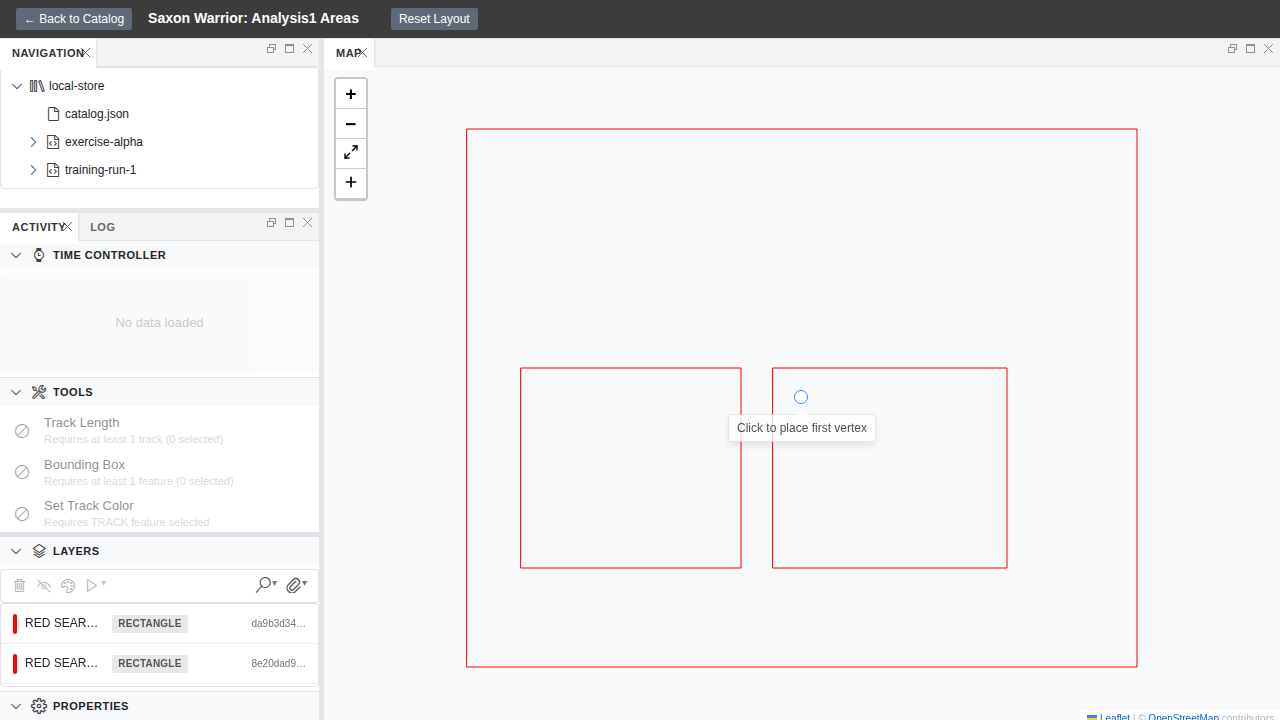
The wiring also exposes drawing state to any reader, not just the map component. The web-shell console can now observe and mutate the drawing mode directly from the store.
By the Numbers
| Metric | Count |
|---|---|
| Feature tests | 13/13 passing |
| Vitest (VS Code message bridge) | 5 tests |
| Vitest (session-state observability) | 4 tests |
| Playwright (web-shell store wiring) | 4 tests |
| Production changes | ~30 lines in mapPanel.ts |
| Pre-existing regression coverage | 7 drawing toolbar tests, all pass |
| Full CI gate | Ruff, pyright, ESLint, tsc, pytest, vitest — all green |
| TypeScript unit tests (monorepo-wide) | 3,664 passed |
| Python tests (monorepo-wide) | 1,887 passed |
Lessons Learned
-
Gap-fill beats rewrite. The architectural review uncovered this gap after the main session-state plumbing had already landed. Rather than re-architecting the message bridge, we added two missing seed messages to an existing handler — about 30–60 lines of production change. The rule is useful: if 90% of the wiring exists and works, do not rewrite it.
-
Webview iframes cannot import the host store; a host-driven mirror is the legitimate pattern. The webview is isolated and cannot directly import the store. Some local React state is not just acceptable but necessary. What matters is that it is host-driven — the host is the authority, the webview is a read-cache. The fix documents this explicitly in code so future maintainers do not treat the
useStateas a bug. -
Pin contracts at the message boundary with Vitest, not Playwright on real VS Code. Playwright against the Extension Development Host has been unreliable in CI. For anything that lives in the host-webview protocol, a deterministic unit test on
handleWebviewMessage('webviewReady', …)is more honest and faster than trying to automate VS Code chrome under xvfb. The web-shell regression suite stays on Playwright, where the browser environment is well-supported. -
Expose test-mode store handles unconditionally; do not gate behind
import.meta.env. The spec originally proposedif (import.meta.env.DEV) window.__sessionStore = …, but that creates two handles in development and zero in a production test. Instead, the handle is always set (only in webview context where it is safe). It is either used or harmlessly ignored.
What’s Next
The same webviewReady flush pattern can absorb any future host→webview seeding without re-architecting. Remaining epic items (F-3.3 result-layer lifecycle, F-3.5 tool-undo gap) have their own scopes and do not need architectural changes here.