What We Built
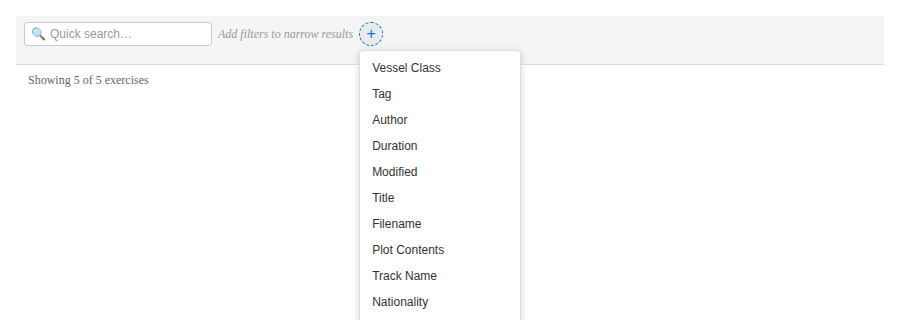
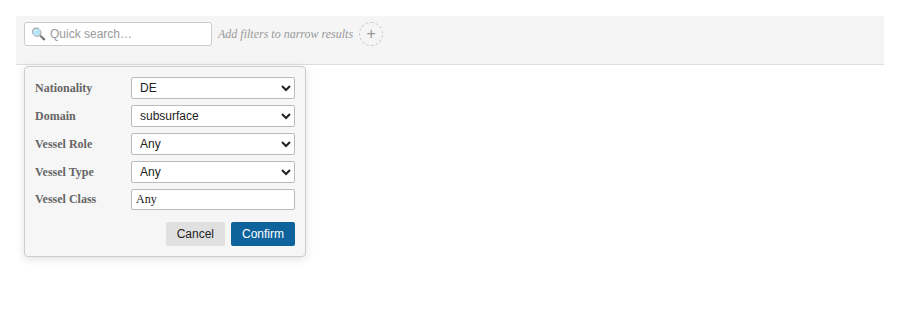
The Filter Bar now has a Platform chip. Click the (+) button, pick “Platform”, choose any subset of nationality, domain, vessel_role, vessel_type, and vessel_class, and confirm — one chip lands in the bar. Under the hood, the chip serialises to a single array_filter(debrief:platforms, …) CQL2 node whose inner predicate AND-combines the selected attributes. The filter engine evaluates the predicate per-platform, so a plot with a British frigate and a German submarine no longer false-positives a “British submarine” query.
The chip behaves like every other chip. Click to edit and the popover re-opens pre-filled. Toggle negate and the CQL2 output wraps in not and the result set inverts. Drag it into an OR container and you can build “British submarines OR German frigates” without any new mental model. Remove and the bar returns to baseline.
The Flow
The whole user story is four screenshots.
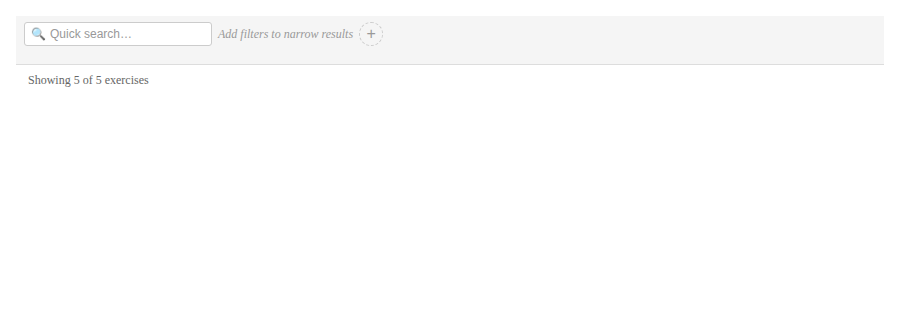
1 — Empty bar
2 — Filter-type menu with the new “Platform” entry
3 — Compound editor with attributes selected
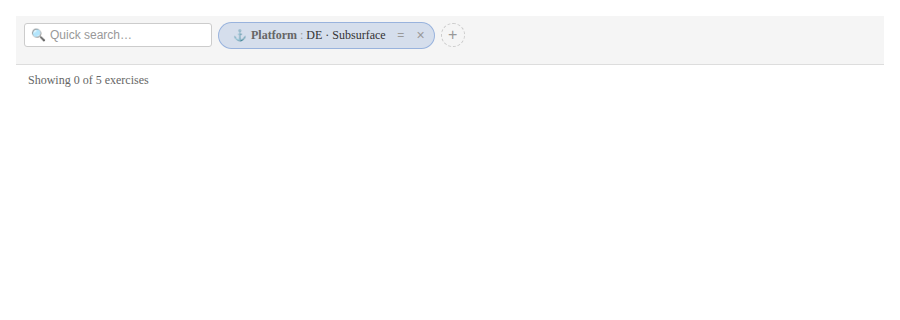
4 — Confirmed chip
How It Works
The reducer stays generic. We extended LozengeItem into a discriminated union over shape — simple for every existing chip type, platform for the new one — rather than splitting into two top-level types. Move-to-container, move-to-top-level, negate, and remove all operate on the union transparently; only the render path and the toFilterExpression mapping needed per-shape branches.
A single platform chip emits an array_filter node over debrief:platforms. One attribute produces a bare comparison inside the lambda; two or more wrap in an AND. Two platform chips inside the same OR container collapse to a single array_filter with an OR-of-comparisons predicate — the engine evaluates each correctly per-platform without special-casing.
Deserialising cuts the other direction. arrayFilterToPlatformAttributes recognises the shape we emit and rebuilds the chip; anything richer (unknown fields, OR inside the AND) returns null and surfaces through the existing FILTER_ERROR_MESSAGE banner. No silent flattening — Article I.3 of the constitution (no silent failures) matters more once #188’s NL→CQL2 generator starts producing shapes the UI can’t always draw.
Theme Parity
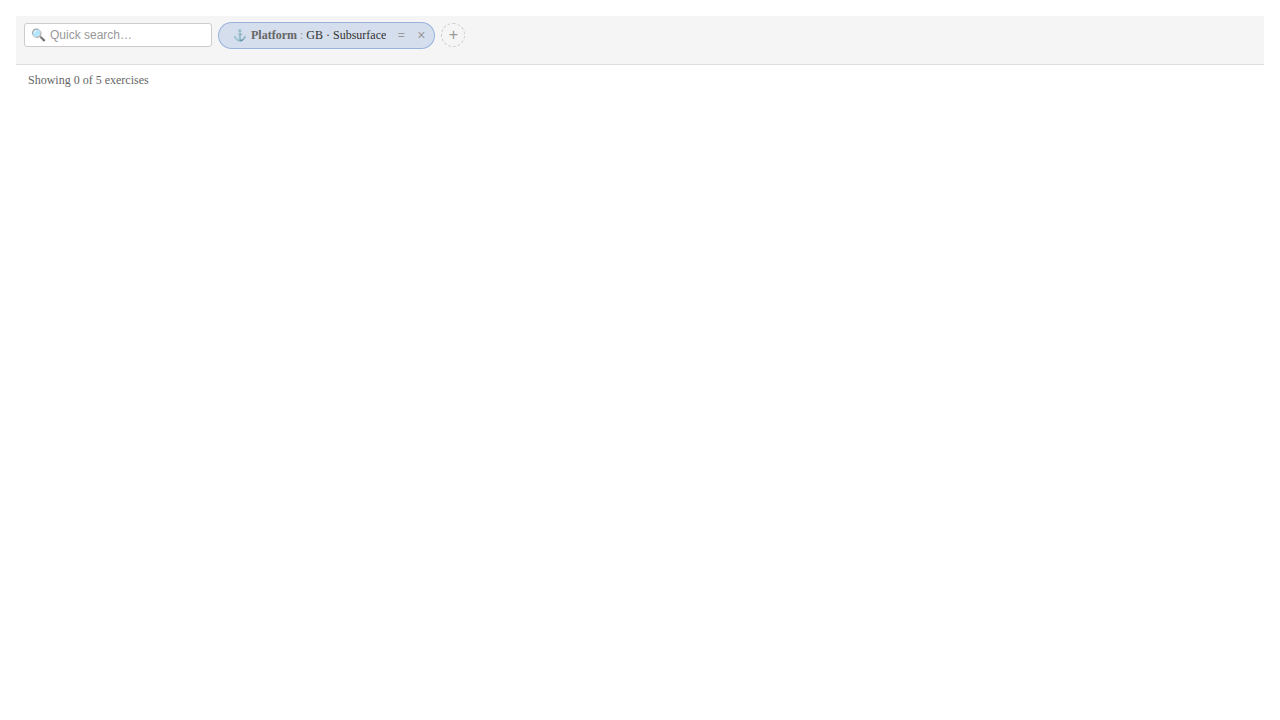
Tinted-blue background, anchor glyph, compound label — all additive styling, so existing chip themes are unchanged.
Evidence
| New tests | 55 |
| Tests passing | 1468 |
| Tests failing | 0 |
| Playwright E2E | 10/10 |
| Regressions | 0 |
The NL→CQL2 corpus tests from #188 rely on a prompt-hash identity — adding platform to the flat schema description would have invalidated every recorded fixture. Keeping the platform chip out of the flat table and documenting array_filter in the paragraph below preserved every existing fixture.
Backwards Loading
Saved filters written before #186 have no shape field on their lozenges. Rather than bumping SavedFiltersCollection.version, we added a single coercion step on restore (kind: 'lozenge' && !shape → shape: 'simple'). Pre-feature saved filters load unchanged; new ones always carry shape. No migration cost.
What’s Next
The adjacent E10 pieces become real now. #188’s NL→CQL2 generator can produce array_filter expressions that the filter bar round-trips end-to-end. #190’s live LLM transport stops being a solo feature — it’s the last piece of a three-part chain (“British submarines” → CQL2 → chip → filtered results) the analyst experiences as one continuous action.